Paul Lorenz · 12 November 2026
Poland's Baltic Shoreline Businesses Adapt Inventory Strategies Amid Shifting Trail Availability
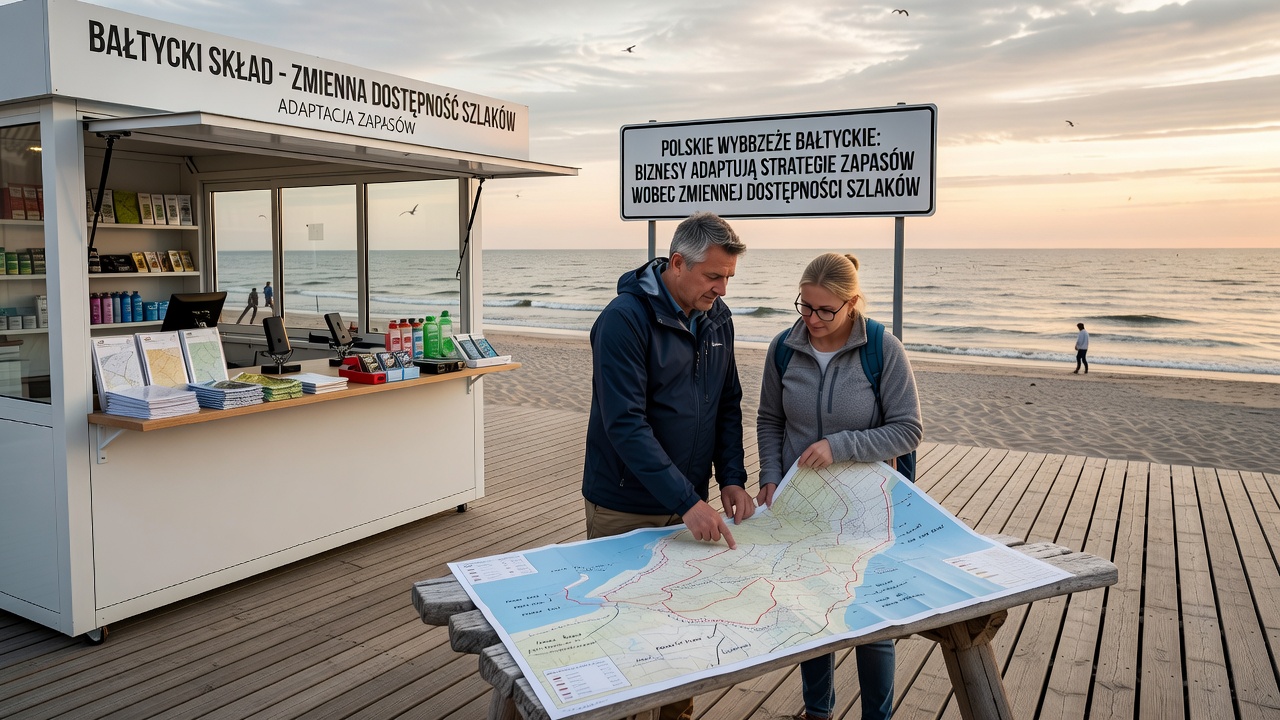
Businesses operating along Poland's Baltic shoreline have begun modifying inventory practices in response to documented changes in trail availability across coastal pathways in Pomerania and the Hel Peninsula region, where access routes have fluctuated due to seasonal weather patterns and usage data collected through 2025 and into late 2026.
Trail Availability Patterns and Business Impacts
Data collected by regional monitoring programs shows that several northern dune-adjacent trails experienced reduced accessibility during summer months of 2025, with similar patterns emerging again by early November 2026 as storm activity altered path conditions near Gdansk and further east. Retailers and rental operators in these zones report corresponding shifts in customer demand, prompting adjustments to stock levels for items tied directly to trail use such as specialized footwear, navigation tools, and portable shelters.
Statistics Poland figures indicate that coastal tourism spending in the Baltic region reached approximately 4.2 billion PLN in 2025, yet businesses note that trail-dependent segments of that revenue have varied by as much as 18 percent year-over-year in areas where path rerouting occurred. Owners have responded by tracking weekly sales data against trail condition reports issued by local authorities, allowing them to scale back orders on low-demand products while expanding selections in beach-adjacent categories like water sports equipment and casual apparel.
Inventory Adjustment Methods in Practice
Shops in towns such as Sopot and Leba have implemented just-in-time ordering systems that reference real-time trail status updates from municipal databases, a practice that gained traction after 2024 pilot programs demonstrated reduced overstock losses. One operator in the area reduced hiking boot inventory by 35 percent between March and September 2026 while increasing kayak accessory stock by 22 percent during the same period, aligning purchases with observed visitor flow toward more stable shoreline access points.

Suppliers serving the region have adapted delivery schedules accordingly, with several wholesalers now offering flexible minimum order quantities for seasonal goods. This approach helps smaller outlets avoid tying up capital in items that lose relevance when trail segments close temporarily. Industry reports from the European Travel Commission highlight similar supply-chain flexibility among Baltic tourism vendors, noting that data-driven restocking has become standard where visitor patterns shift seasonally.
Regional Data and November 2026 Trends
By November 2026, preliminary tallies from local chambers of commerce show that 62 percent of surveyed shoreline businesses had revised at least one product category in their inventory plans compared with the prior year. These revisions often involve cross-referencing visitor logs from trailhead counters with point-of-sale records, creating a feedback loop that identifies which routes draw consistent foot traffic versus those affected by erosion or maintenance closures. And while overall visitor numbers remained stable, the distribution across specific access points changed enough to influence stocking decisions at multiple outlets.
Businesses have also begun coordinating with regional tourism boards to receive advance notices of planned trail work, enabling earlier adjustments to order cycles. This coordination draws on datasets maintained by Polish maritime authorities and local environmental agencies that track both natural changes and infrastructure updates along the coastline.
Supply Chain and Vendor Adaptations
Vendors outside the immediate coastal strip have noted increased requests for mixed-product pallets that combine traditional trail items with alternatives suited to altered access conditions. A logistics provider based in Gdansk reported handling 14 percent more such customized shipments during the third quarter of 2026 than in the same period of 2025. These shipments frequently include shorter-lead-time items such as lightweight rain gear and multi-use accessories that serve both trail and beach users depending on daily conditions.
Training programs offered through trade associations have introduced modules on inventory analytics, teaching staff how to interpret trail availability maps alongside sales trends. Participants learn to apply basic forecasting models that weigh historical footfall data against current route status, producing order projections that reduce both excess stock and missed sales opportunities.
Conclusion
Poland's Baltic shoreline businesses continue to refine these inventory approaches as trail availability data accumulates through the remainder of 2026 and beyond. The combination of regional usage statistics, supplier flexibility, and internal sales monitoring has produced measurable shifts in stock composition without requiring large-scale infrastructure changes. Observers note that these adaptations remain tied to ongoing monitoring efforts by local and national agencies, ensuring that inventory decisions stay aligned with documented access patterns along the coast.